
Naked is not an easy film to watch, nor is it an easy one to forget. Mike Leigh’s misanthropic, jarring, and wholly uncompromising portrait of a man (and by extension, a world) in moral and spiritual freefall has garnered attention and praise ever since its premiere at the 1993 Cannes Film Festival, at which it earned Best Actor and Best Director awards for David Thewlis and Mike Leigh respectively. The bleak portrait of London as it neared the millennia and the uncomfortable presentations of sexual and misogynistic violence in the film have made it somewhat of a black sheep among Leigh’s filmography, pushing his commonly explored themes to their most extreme and dark corners. In Naked, Leigh throws us headfirst into a frightening story of social alienation, corrosive despair, and rampant misanthropy, where bleakness lingers in every frame.

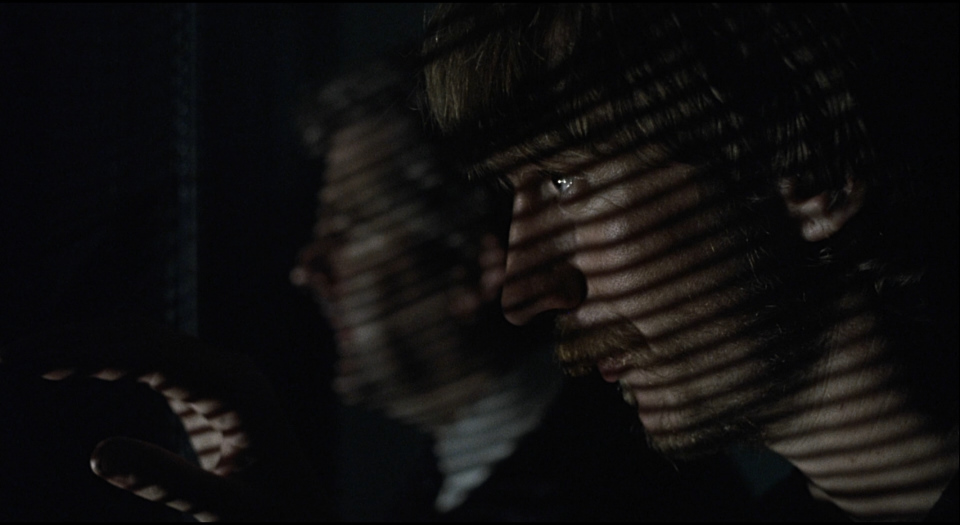
At the centre of this film is David Thewlis, in a career-defining performance, as Johnny – a hyper-intelligent yet directionless, charismatic yet repellent, philosopher trapped in the shell of society. His caustic wit and long, spiralling monologues serve as weapons against a society he despises and, perhaps more potently, against himself. He drifts through the streets of London like a scruffy ghost, haunting the modern world. Naked, for me, is the experience of watching a man unravel and watching others do so around him, stripping people to their raw and often uncomfortable values. Leigh’s direction here evolves to a much darker tone, his typical naturalism now laced with a nightmarish surrealism. The London in which Johnny roams is cold and even feels apocalyptic at times, filled with a myriad of lost souls, abusers, their victims, and bystanders. As in all of Leigh’s films, the devised dialogue remains sharp and organic, but here it’s weaponised, charged with venom and anxiety, reflecting a world of depravity on the brink of a new age – the year 2000.
If there is one word to describe Naked, it would be misanthropic. If I could choose another, I would choose enigmatic. It offers no moral consolation, no catharsis or redemption. It’s a howl into a void of depravity, a dark vision of Britain where social bonds have withered, civility has ceased, and intelligence holds no value and is no shield against despair. I believe that it is in this bleakness that the film finds its searing strength. Leigh successfully holds a mirror to the growing dark corners of our psyche and our societal connections that can be easily ignored (or, alternatively, impossible to ignore based on circumstance). Johnny may be loathsome, but he is also painfully recognisable as a vessel for cultural anxieties; our unspoken rage. In Naked, Leigh captures a sense that society is eating itself, traditional structures have collapsed, and the undercurrents of nihilism now run deep into the lives of all.
In its brutality and rawness, Naked is one of Leigh’s most challenging achievements. It is one of his most essential films, and for me, it certainly acts as a counteract to our understanding of life through his gentler films. If Leigh is a humanist, then Naked is the necessary shadow to that light – it is not a film that consoles its audience, but one that abrasively confronts it.
Thank you for reading.
 MORTFILMS