
Fritz Lang’s M is a film that lingered in my mind long after the screen faded to black. A seminal success of the early sound ‘talkies’ era of cinema, M is both masterfully constructed in its suspenseful narrative and as chilling meditation on justice, morality, and the fragility of society. Despite being made over 90 years ago in the early 1930s, its themes and style remain relevant, cementing its place as one of the most influential and important films ever made.
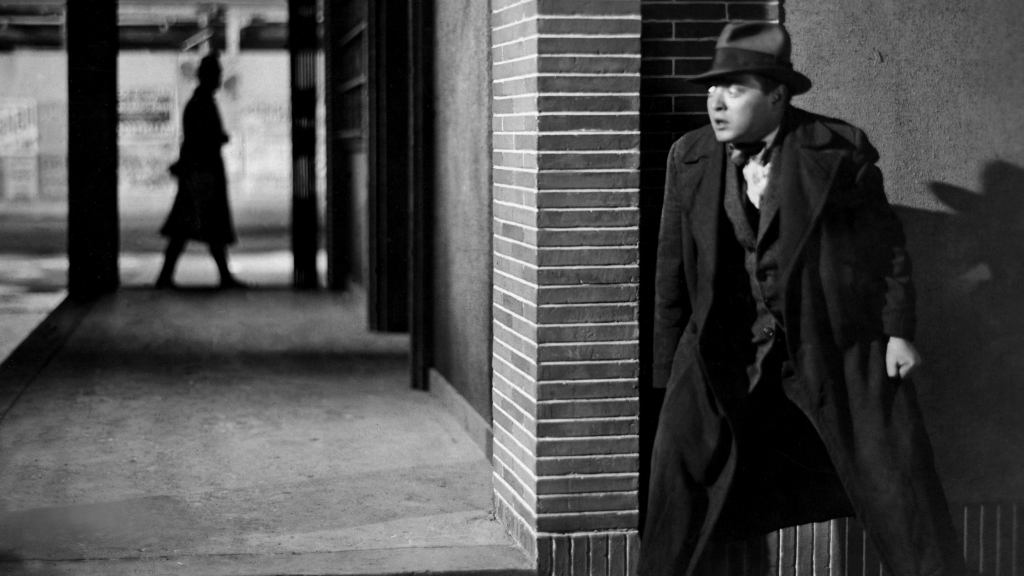
Set in a Berlin gripped by the terror of an unknown child murderer, M follows the manhunt for this character – who is played to eerie perfection by the fantastic Peter Lorre in his breakout role. Lorre’s acts loom over the urban landscape, infecting its citizens with paranoia. Lang’s direction is meticulous, in particular the use of sound and shadow is brilliant in heightening the tension at every turn. Hans Beckert’s frequently whistled rendition of Grieg’s In the Hall of the Mountain King becomes nothing less than an auditory omen of impending threat. This pioneering use of the leitmotif in film, is still as sinister as anything in today’s psychological thrillers.

Lang, already celebrated for his silent films and influence within the German Expressionist Movement, embraces the possibilities of sound in film with astonishing innovation, when so many others struggled to adapt to the introduction of it. Unsettling silences and suggestive soundscapes are effective in building tension, and I found created a falsely peaceful aspect to some scenes. Rather than showing violence, Lang lets dread build through implication, shadows, and reactions, an approach that makes the horror all the more palpable – and, admittedly, cathartic. The film’s cinematography is equally striking, capturing the 1930’s Berlin’s grimy underbelly with elements of realism while employing stark contrasts and exaggerated angled shots reminiscent of the German Expressionism Movement in which Lang strived.
M does not just succeed as a thriller. It is also important as a scathing social critique. As fear spreads through the city, the line between law and criminality blurs. Both the authorities and the criminal underworld alike seek to capture Beckert, each seeing him as a disruption to order in their own way. In the climactic court scene, where Beckert is confronted by the criminals, who have taken justice into their own hands, is, in my opinion, one of cinema’s most gripping moral dilemmas. In Beckert’s desperate monologue, pleading that he cannot control his own monstrous urges – Lang forces the audience to consider whether justice is about punishment or understanding. The film’s ending, is a testament to its depth. Lang refuses to offer neat conclusions to us, leaving the audience with an unsettling meditation on guilt and justice.
M is as much about the society that hunts these monsters as it is about the monster itself, and Lang’s ability to make a whole society, a whole cities worth of people, into the protagonist (and antagonist) is incredible. To me, few films possess the timelessness resonance of M. It laid the groundwork for the modern psychological thriller, influencing all our favourite directors, from Hitchcock to Fincher. Yet, despite its historical significance and time of release, M doesnt feel like a relic. I believe it remains as chilling, thought-provoking, and masterfully directed and devised as it was nearly a century ago.
Thank you for reading.
 MORTFILMS