
Eva Victor’s directorial debut presents real gravitas behind the depiction of certain themes which make each laugh painful in a way all the great ‘dramedy’ directors and satirists strive to achieve. But further than that, it’s a film that works wonderfully in flux, with the switch from comedy to drama more serious in tone, to a blend of the two, often feeling smooth and masterful. Sorry, Baby depicts various segments (labelled as different ‘years’ in the film) in the student and adult life of Agnes Ward (played by Eva Victor themself) and the lasting effect of ‘that’ and their relationships with work, sex, and their friends/colleagues. The film is both precisely controlled and unpredictable (at least it was unexpected to me). The construction of the plot, and within that, singular scenes and jokes, has clearly had a lot of thought and effort poured into it through the guidance of personal experience and dedication to portraying (potentially awkward) authenticity. Victor is just one person who has gotten to share their story, but there are undoubtedly many more with varied experiences and thoughts. This is, for me, what the movie is able to portray to its audience very well, that the individual reaction to traumatic events is just that – individual. The film teaches that each person reacts and responds differently and often in a multitude of ways. We see a person who seems to simultaneously be going through infinite flux yet remaining familiar.
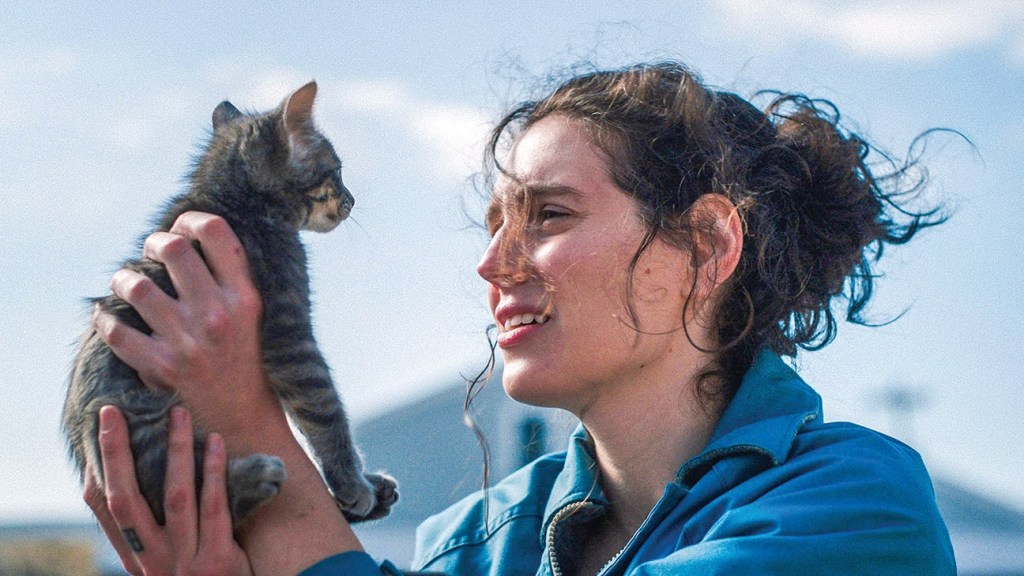

‘That’ as it is often referred to in the film – perhaps to avoid the terrifying reality of it, or to not give an ultimately defining label for others to make assumptions based on – is a sexual assault perpetrated by Agnes’ advisor at university upon them. Throughout the course of the film, it seems to be only Agnes’ close friend, Lydie, who supports and helps them in an appropriate manner. When examined by a doctor, they are told with harsh coldness ‘You should’ve come earlier’ so that they could gather forensic evidence. Two representatives of the university speak to Agnes but can’t help them. But those two can make themselves feel better by saying the painfully funny line ‘We get it. We’re women.’ despite offering no actual help apart from expected empathy. These are only small scenes in a larger plot, but they stood out as an impactful critique of the failings of the almost emotionless practices of dealing with sexual assault cases in the medical and legal fields. Agnes doesn’t go to the police, but we can all imagine that would’ve ended with a similar result. These themes are obviously heavy, and I imagine some audiences will object to the merging of comedy and drama when depicting such issues on screen (in fact, at my screening, full of little old ladies, I was the only one cracking up at the jokes, and found myself feeling like a much more mundane version of Max Cady from Cape Fear). For me, the moments of comedy (and not every joke here lands, there are a few that subvert the frequent ‘painfully funny’ humor for more painfully unfunny pieces – but this is really a minor issue, and there are only one or two jokes that feel this way, such as the scene with the mouse) bring a sense of realism to the film by portraying the deeply dark awkwardness of the situations Agnes. If you like dark or cringeworthy humor, you will probably find this funny alongside being a moving film. If you don’t, you might find this a moving portrait of trauma at the very least.
Thank you for reading.
 MORTFILMS