
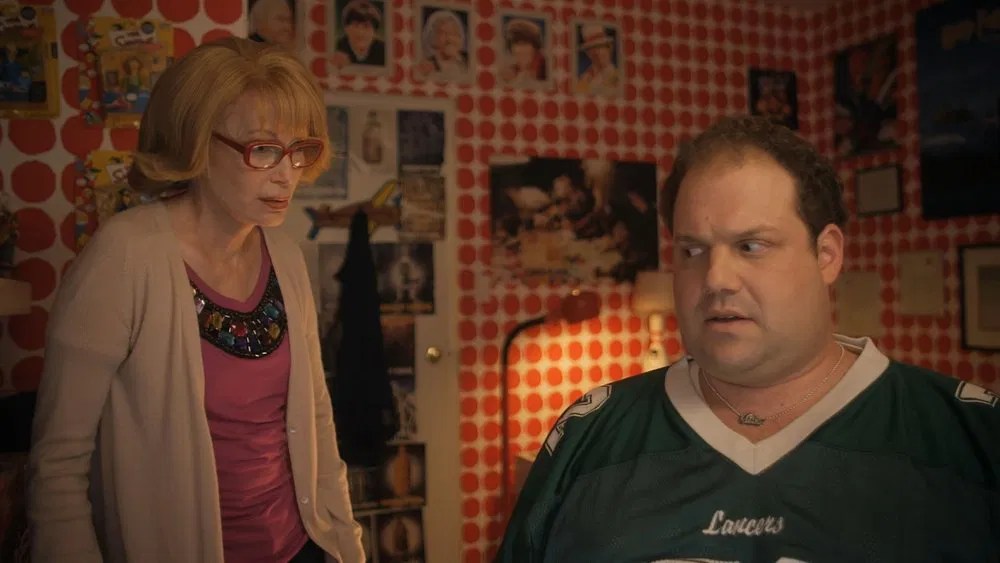
Dark Horse was labelled as ‘testing the limits of our sympathy’ by its director, Todd Solondz. In this sense, it is perhaps one of his most repulsive (this is a positive adjective when describing Solondz’s films) works because it often felt less of a dark comedy film and more of a simply ‘dark’ film. In this latest instalment of films about anguish in the suburbs, Solondz illustrates a character who will be far too close to home for many viewers. That character is Abe, who refers to himself as somewhat of a dark horse in the film, but in fact he is closer to the opposite; he works (or rather endlessly scrolls through eBay while allowing others to complete his work for him) at his father’s company and spends most of his time outside of work collecting toys, figures and memorabilia or complaining either about his family or to his family – with whom he still lives despite being the ripe old age of 35.
In a very similar opening to his 1998 masterpiece Happiness, Solondz depicts two people sitting at the same table at a wedding, although they are almost certainly sitting alone and have probably been put next to each other by the power of a seating plan. As everyone else enjoys themselves on the dance floor, Abe and the woman sitting next to him, Miranda, bore themselves with idle conversation. Abe eventually squeezes Miranda’s number out of her through annoyingly persistent nagging, despite her clear reluctance – of which, like most things in life, Abe is oblivious.
Perhaps influenced by the man-child characters in comedy films such as The Hangover, The 40-Year-Old Virgin, and basically any Will Ferrell movie, Solondz and actor Jordan Gelbert simultaneously build the character of Abe to be both a more grounded version of these comedic archetypes and a caricature of the typical basement-dwelling nerd. Personally, I lean towards the portrayal embodying more of the former approach. Here, the man-child archetype is less comedic, though there’s lots of dark humour surrounding just how much of a nuisance Abe is, and is certainly less lovable than Zach Galifianakis or Steve Carell. Abe is aggressive, often cruel to others, selfish and incredibly ignorant. On paper, the movie shouldn’t work. If it’s not always a dark comedy, how does the film expect us to follow this extremely dislikable character? In films like Naked, the main character is unlikeable, yes, but also offers thought-provoking conversation and philosophical debate as he meanders through London. If we are not laughing at Abe, how are we expected to put up with him for 90 minutes? Yet it works (at least for me)! I think if the audience does not find the film funny, and they do not object to it, then they will find themselves finding meaning in pitying Abe. It’s perhaps the easiest option after those other two reactions. Not pitying Abe for the reasons Abe pities himself in the film, but rather out of sadness that someone can go on leading such a self-interested and mean-spirited life. In fact, the film itself perhaps promotes this view, claiming in irony how Abe’s life is hard despite all the advantages and opportunities to succeed he has been given.
Thank you for reading.

 MORTFILMS